Health Sector — Hazara Division
Eight districts — Abbottabad, Battagram, Haripur, Lower Kohistan, Mansehra, Kolai Palas, Torghar, and Upper Kohistan — facility overview, major secondary hospitals, and healthcare structural challenges.
Facilities (division total)
Total569+The eight districts of Hazara Division collectively host a minimum of 569 formal public health facilities, stretching from massive urban tertiary teaching complexes to isolated high-altitude primary outposts.
DHQ note: Lower Kohistan, Kolai Palas, and Torghar completely lack a designated functional DHQ hospital. RHC counts for southern plains districts are subsumed within broader primary networks.
This data covers the entire Hazara Division (8 districts).
Facility breakdown by district
The public health infrastructure distribution exhibits severe geographic disparity between the highly developed southern service hubs and the structurally isolated northern mountain valleys.
| District | Population | Area | DHQ | THQ | RHC / BHU / dispensary baseline |
|---|---|---|---|---|---|
| Mansehra | 1,797,177 | 4,579 km² | 01 | 01 | Network serves 128 Union Councils |
| Abbottabad | 1,419,072 | 1,969 km² | 01 | 01 | Supported by major regional teaching hubs |
| Haripur | 1,174,783 | 1,725 km² | 01 | 02 | Supported by industrial/dam-basin medical units |
| Battagram | 554,133 | 1,301 km² | 01 | 01 | Limited primary units across 20 Union Councils |
| Upper Kohistan | 422,947 | 5,440 km² | 01 | 00 | 02 RHCs, 16 BHUs, 03 Civil Dispensaries |
| Lower Kohistan | 340,017 | 642 km² | 00 | 01 | Severe gap; relying on basic sub-district stations |
| Kolai Palas | 280,162 | 2,660 km² | 00 | 01 | 02 RHCs, 11 BHUs, 12 Civil Dispensaries |
| Torghar | 200,445 | 454 km² | 00 | 00 | Zero secondary setups; 20 BHUs total |
Facility types — division counts
BHUs in vulnerable districts
Torghar operates with BHUs only — no DHQ or THQ.
DHQ & THQ by district
Major regional reference & teaching hubs
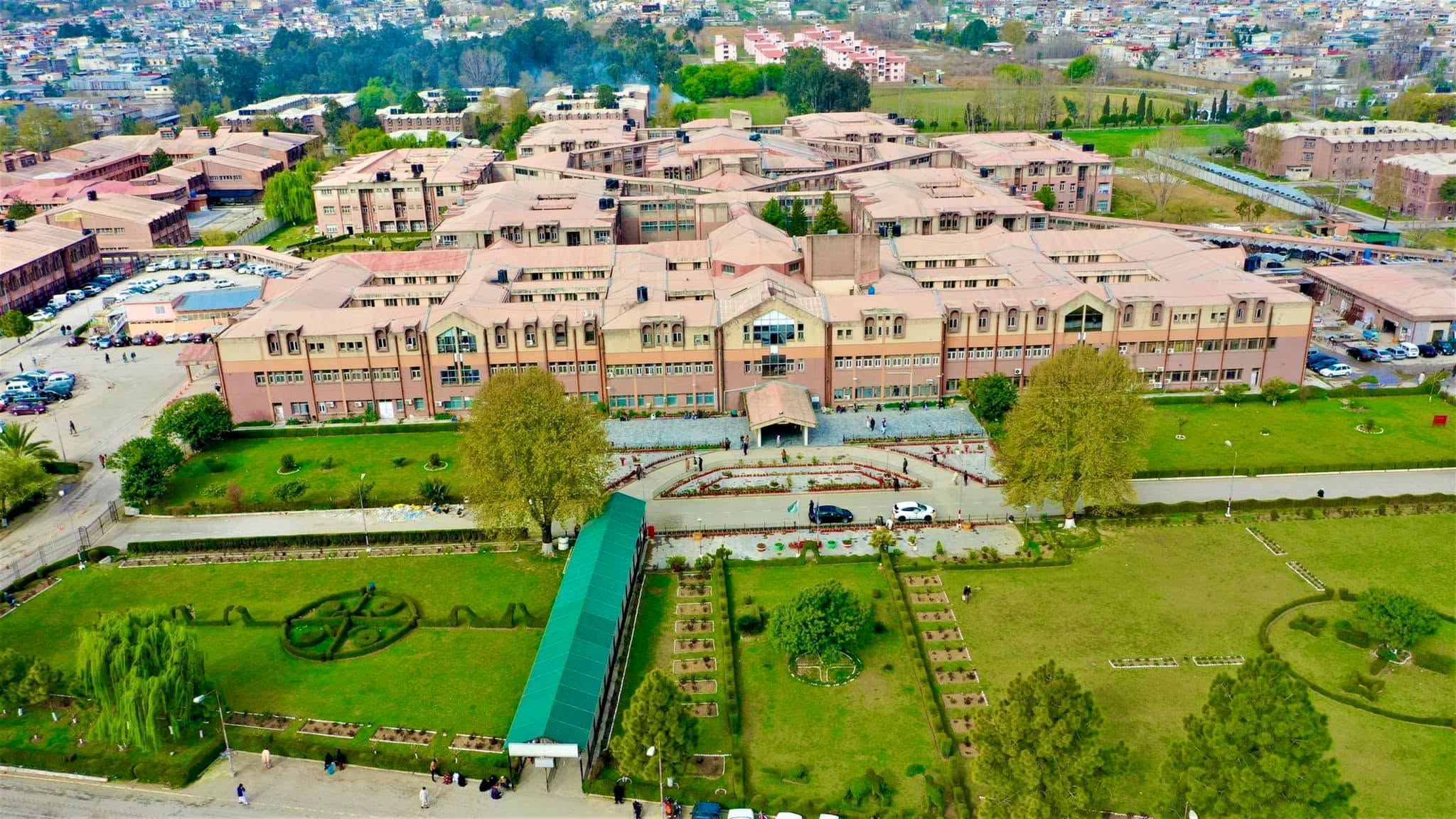
Ayub Teaching Hospital & DHQ Hospital (Abbottabad)
Role: Acts as the apex tertiary care medical facility and secondary reference center for the entire northern Khyber Pakhtunkhwa province and the Karakoram Highway transit corridor.
Catchment load: Severely overburdened due to a relentless influx of critical patients bypassing under-resourced secondary facilities in surrounding districts.
Specialized affiliations: Heavily backed by adjacent world-class premier medical and technical institutions, including Ayub Medical College and COMSATS.
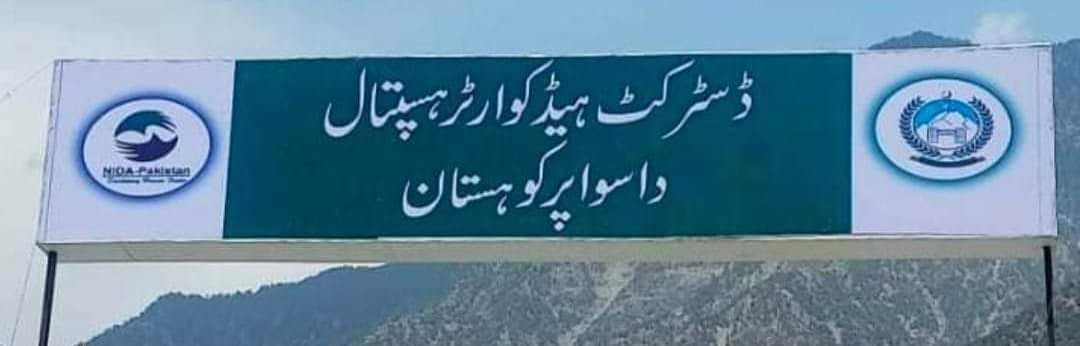
DHQ Hospital Dasu (Upper Kohistan)
Role: The lone secondary medical bulkhead across the upper Indus River mountain frontier.
Critical deficit: Forces a population of 422,947 to rely exclusively on this single station. It completely lacks specialized trauma care systems or neonatal intensive care units (NICU), creating extreme danger given its proximity to high-risk CPEC logistics routes and heavy construction zones like the Dasu Hydropower Project.
DHQ exclusion — Lower Kohistan, Kolai Palas & Torghar
Three contiguous, highly vulnerable districts — Lower Kohistan, Kolai Palas, and Torghar — operate with a 100% absence of functional DHQ hospitals.
Emergency trauma victims, laboring women, and pediatric cases are regularly forced to negotiate unpaved tracks and travel hours down the Karakoram Highway to access secondary or tertiary medical treatment in Mansehra or Abbottabad.
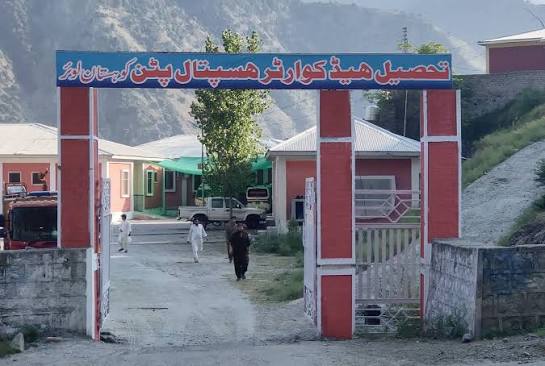
Torghar has zero secondary setups (20 BHUs only). Kolai Palas relies on one THQ, 2 RHCs, and 11 BHUs across remote valleys. Lower Kohistan has only one THQ at Pattan with no DHQ.
Critical systemic gaps & structural vulnerabilities
1. Absolute DHQ infrastructure exclusion
Lower Kohistan, Kolai Palas, and Torghar operate with no functional District Headquarters (DHQ) hospitals. Emergency cases are forced down the Karakoram Highway to Mansehra or Abbottabad for secondary or tertiary care.
2. Ground-driven physical isolation
Rugged, fragmented mountain landscapes subject local populations to severe transport risks. Frequent flash floods, rockslides, and heavy snow wash out internal dirt links, leaving entire sub-valleys completely cut off from basic health units for months at a time.
3. Critical professional resource gaps
The primary health network across remote valleys is severely compromised by a systemic shortage of qualified healthcare professionals — driven by an absolute geometric deficit of specialized maternal health infrastructure combined with chronic staff absenteeism across remote Union Councils.
4. Convergence with digital & environmental vulnerability
Crucial mountain healthcare units function inside massive cellular communication dead zones. Because these medical centers are completely unlinked from early disaster warning systems or digital telecommunication networks, they remain dangerously isolated during catastrophic environmental emergencies.
Districts without DHQ coverage
| District | DHQ | Nearest secondary / tertiary referral |
|---|---|---|
| Lower Kohistan | None (THQ Pattan only) | Mansehra, Abbottabad via Karakoram Highway |
| Kolai Palas | None (1 THQ) | Abbottabad, Mansehra — hours over mountain tracks |
| Torghar | None (20 BHUs only) | Mansehra, Abbottabad |